Streaming Didn't Just Kill the Cinema It Starved the Home Theaters
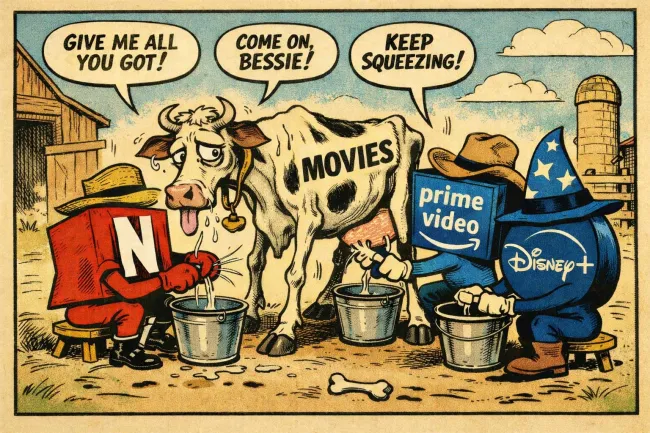
There used to be a time when building a home theater meant chasing the absolute edge of fidelity. You didn't just watch a movie; you owned it, and you played it back exactly how the sound engineers intended. But look around today. That entire culture is being systematically suffocated.
Everyone talks about how streaming killed the local multiplex, but nobody talks about how it’s actively starving the home theater scene. We traded ownership for the convenience of a web browser, and in the process, we gave up audio quality, video depth, and actual artistic integrity.
Let’s get the technical reality out of the way. If you’ve spent the time and money dialing in a proper 7.2.4 setup, you know exactly what I mean. When you push a pure, uncompressed video signal through MPC-HC and madVR onto a 118-inch screen, and bitstream the audio directly to your AVR, the room actually breathes. The subs hit your chest. The overheads track with pinpoint accuracy.
Streaming simply cannot do this and it will never will.
Those shiny "4K HDR" and "Dolby Atmos" badges you see on streaming platforms are a joke. They are heavily compressed, dynamic-range-crushed illusions. If you're watching from a browser, DRM locks you into basic stereo or mangled 5.1. Even if you use a premium app, the "Atmos" you’re getting is just lossy Dolby Digital Plus. It’s entirely stripped of the raw bandwidth and metadata depth of a lossless TrueHD track found on a disc. It’s a flattened whisper of the original mix.
And because the general public accepted this compressed garbage as "good enough," the studios are abandoning physical media entirely. Try finding a steady release of 3D Blu-rays these days. Look at how many major blockbusters are skipping physical releases with uncompromised Atmos tracks. The studios know the physical market is shrinking, so they hoard the highest quality formats to trap you inside their proprietary monthly subscriptions.
But the downgrade isn't just about the bitrate anymore. It's about the media itself. When a company’s entire business model relies on a monthly subscription, the goal is no longer to make a masterpiece. The goal is to churn out enough "content" to keep you from canceling.
Netflix operates like a factory, pushing forced diversity checklists and algorithmic pacing over actual, organic storytelling. The art gets completely lost to the agenda. Amazon just takes its infinite retail cash, buys up legendary franchises, and guts them to produce high-budget, low-effort trash. They literally wear the skin of classic IP just to sell more Prime subscriptions. And Disney? They’ve swallowed the industry whole, flattening the edges of every universe they buy, trading on nostalgia while actively degrading the lore to push their own boardroom messaging.
That is exactly why I’m done. No more paid subscriptions for me. I’ve gone back to my roots, and honestly, I’m proud to torrent my Blu-rays now. Grabbing a 30GB untouched movie file with its full video bitrate and perfect, lossless sound is a light year away from anything you’ll ever stream. The experience isn't even in the same universe. Why should I pay a monthly fee to be fed compressed audio and sanitized corporate slop when the real deal is out there, just like the old days?
This is exactly why archiving the underground and holding onto physical media is so critical right now. We are moving into a closed-loop reality where you don't own the movie, the audio is purposely crippled, and the story has been sanitized by a corporate committee.
The public cinema is already dead. But if you want to experience actual fidelity, the only way out is to keep the raw files, hold onto the hardware, and make sure you're the one running as an owner in living room. Because the streaming services certainly aren't going to hand you the keys.